MidGround / Brand Skeleton v0.2B Alternate expression
Editorial tension Architectural warmth Working comparison
Alternate brand expression

Composed tension for high-stakes conversation.

This version tests a sharper and more editorial atmosphere while keeping the same brandbook architecture. The aim is to see whether MidGround benefits from a more structural, graphic, and intentionally directed tone.

Working position

MidGround still needs to feel intelligent, composed, and trustworthy, but here the system leans more toward structure, contrast, and graphic containment.

Document outline

This alternate skeleton tests whether a firmer visual frame creates a stronger premium signal.

  1. Brand foundation
  2. Logo rationale and guardrails
  3. Color token roles
  4. Typography usage
  5. Core interface language
  6. Voice guidance
01
Foundation
Brand core

Foundation before decoration

This system should feel like a measured operating environment for difficult conversations. Design choices should reduce heat, not add more stimulus.

"MidGround creates a held center before reaction."

The brand is strongest when it signals structure, emotional steadiness, and credibility. Restraint is not minimalism for its own sake; it is part of the product promise.

Guardrails
  • Do feel: composed, deliberate, modern, humane.
  • Do not feel: clinical, soft-focus, app-playful, or overly therapeutic.
  • Bias toward: clarity, whitespace, rhythm, and precise language.
Principle 01

Held center

The interface should create a sense of pause and containment before movement. Calm comes from framing, not decoration.

Rule: Use whitespace and stable containers to signal safety.
Principle 02

Quiet precision

Forms stay simple, measured, and legible. No visual over-talking, novelty styling, or performative intelligence.

Rule: Prefer one strong move per section, not three small effects.
Principle 03

Human, not sentimental

Warmth belongs in pacing, wording, and tone. It should not rely on softness tropes or therapy-coded visuals.

Rule: Warm neutrals can support, but should never dominate the system.
Principle 04

Trust through restraint

Authority comes from clean structure, consistent spacing, and legibility rather than loudness or hyper-polished flourish.

Rule: Let hierarchy carry confidence instead of decorative emphasis.
02
Logo
Logo system

Uploaded logo asset inside the brand system

This section now shows the uploaded logo asset directly, inside the same environment as the rest of the brandbook. That lets us review the real logo in context while still keeping the constructed direction visible at the top of the page.
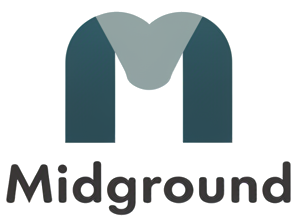
MidGround uploaded logo asset
Clear space

Keep generous quiet space around the uploaded logo lockup so the relationship between the mark and wordmark stays clear.

Minimum read

For now, keep this as a full lockup at smaller sizes rather than breaking apart the icon and text too early.

Rationale

What the form communicates

  • The darker side pillars give the logo stability and immediate presence.
  • The softer bridge shape introduces warmth and relation inside the form.
  • The rounded wordmark keeps the overall read friendly while staying solid.
Usage rules

How to keep it credible

  • Prefer the full uploaded lockup on light surfaces while we continue refining direction.
  • Do not add outlines, shadows, or extra symbols around the existing asset.
  • Review the text weight and digital feel of the wordmark separately from the icon shape.
Do not stretch Distorting the arches or pillar width weakens the balance that makes the lockup feel stable.
Do not over-style Avoid gradients, gloss, outlines, or effects that make the mark feel app-like or decorative.
Do not separate too early Until the icon is more mature, avoid using the symbol alone in places where the full lockup would read better.
03
Color
Color system

Warmer contrast, stronger structure

This alternate palette pushes MidGround into a more editorial register: deeper ink, warmer clay, and cooler steel tones working together under stronger contrast.

Deep Ink Teal#274856

Primary authority tone for key actions, anchors, and structural moments.

Steel Mist#98A6A6

Secondary tone for cooling space, layered surfaces, and guided transitions.

Clay Copper#B77D63

A warmer accent that introduces human tension without becoming soft or wellness-coded.

Stone Ground#E8E1D8

Base canvas for the system, making the darker tones feel deliberate and framed.

Primary Use for core CTAs, key headings, and anchored moments of decision. --accent-primary
Secondary Use for gentle emphasis, quiet backgrounds, chips, and bridge states. --accent-secondary
Warm support Use for human context, moderation, and select conversational moments. --accent-warm
Surfaces and lines Keep neutrals soft and low-contrast so the system breathes. --surface / --line
04
Type
Typography

Sharper typography with editorial control

In this direction, typography becomes more structural. The headings carry more authority and compression, while the body stays sober and highly readable.

Specimen

Clarity can feel strong without feeling cold.

Lead text in this direction feels firmer and more editorial, but it should still avoid hype or legal-tech stiffness.

Heading 1 64 / 1.02 / -0.055em
Heading 2 40 / 1.08 / -0.05em
Heading 3 28 / 1.1 / -0.04em
Body text should stay readable, even, and quietly warm. 16 / 1.58
Recommended stack Manrope for headings, IBM Plex Sans for body
If licensing expands GT America, ABC Diatype, or Akkurat would push this direction further.
Voice rule Sentence case. Tighter rhythm. More decisive hierarchy. Keep the language human even when the typography feels more exact.
05
Components
UI language

Stable containers, calm actions, breathable interaction

Core UI should feel less like office software and less like therapy-tech. Components need to be rounded but disciplined, warm but controlled.

Actions

Buttons and chips

Start a conversation
See how it works
Read more
Held center
Guided mediation
Calm authority

Primary actions should feel anchored. Secondary controls should remain architectural, not flashy or product-marketing styled.

Inputs

Text containers

Describe what happened, what you need, and what feels stuck.
Long-form reflection area for mediation intake, context gathering, or guided reframing.

Inputs should feel like composed containers. The product is asking for clarity, so the UI should never feel bureaucratic or emotionally loud.

Conversation module

Mood reference

I feel like every discussion turns into defense before we even get to the point.
MidGround identifies escalation, names the emotional temperature, and suggests a calmer next step.
I want to respond clearly without making things worse.

The center message should feel like guidance from a steady facilitator. It is clear and humane, but never sentimental or chatty.

06
Voice
Tone of voice

Plainspoken, intelligent, steady

The verbal system should mirror the visual one: supportive without softness theater, precise without sounding legalistic, and modern without startup cliche.

Write like this
  • Name the situation clearly before offering guidance.
  • Use short, calm sentences with confident pacing.
  • Let empathy show through clarity rather than emotional performance.
Avoid this
  • Therapy language used as branding texture rather than meaning.
  • Over-promising transformation, harmony, or breakthrough.
  • Playful app voice, hype punctuation, or motivational slogans.